Bisbee Tankless Water Heater Service: Gas Supply, Venting and Scale Questions
A tankless heater heats water as it flows, so there is no tank to leak and no standby loss. It also asks more of the house. The gas line has to deliver more volume at once, the vent has to be a specific type and the water it uses leaves scale behind. Those three requirements, more than the unit itself, decide whether a tankless heater suits a Bisbee house.
This page covers installing one, repairing and descaling an existing unit and converting from a tank. It also explains why the first visit should be about the gas meter, the vent path and the water, not a sales pitch. For a heater that has already failed, call the dispatch line, and a plumber from our network takes it from there.
Dispatch answers 24/7. Plumbers from our network serve Bisbee and the outlying areas.
Tankless or tank: what actually changes
| Point | Tank heater | Tankless heater |
|---|---|---|
| Hot water supply | A stored volume that can run out | Continuous flow, limited by flow rate at the outlet |
| Gas or electric demand | Modest, spread over time | High for a moment; the gas line or circuit must be sized for it |
| Venting | Standard flue on most gas tanks | A vent type the maker specifies, often sealed or stainless |
| Space | A closet floor | A wall, indoors or outdoors, with clearances |
| Water treatment | Sediment collects in the tank | Scale collects inside the heat exchanger |
Neither type is better in every house. A tankless unit wins on space and continuous hot water, and loses when the gas line is undersized or the vent run is long. A tank wins on simplicity and on cost of the surrounding work. Ask the plumber for a short list of what would have to change in your house, and judge the choice from that.
Gas supply, venting and electrical: the first check
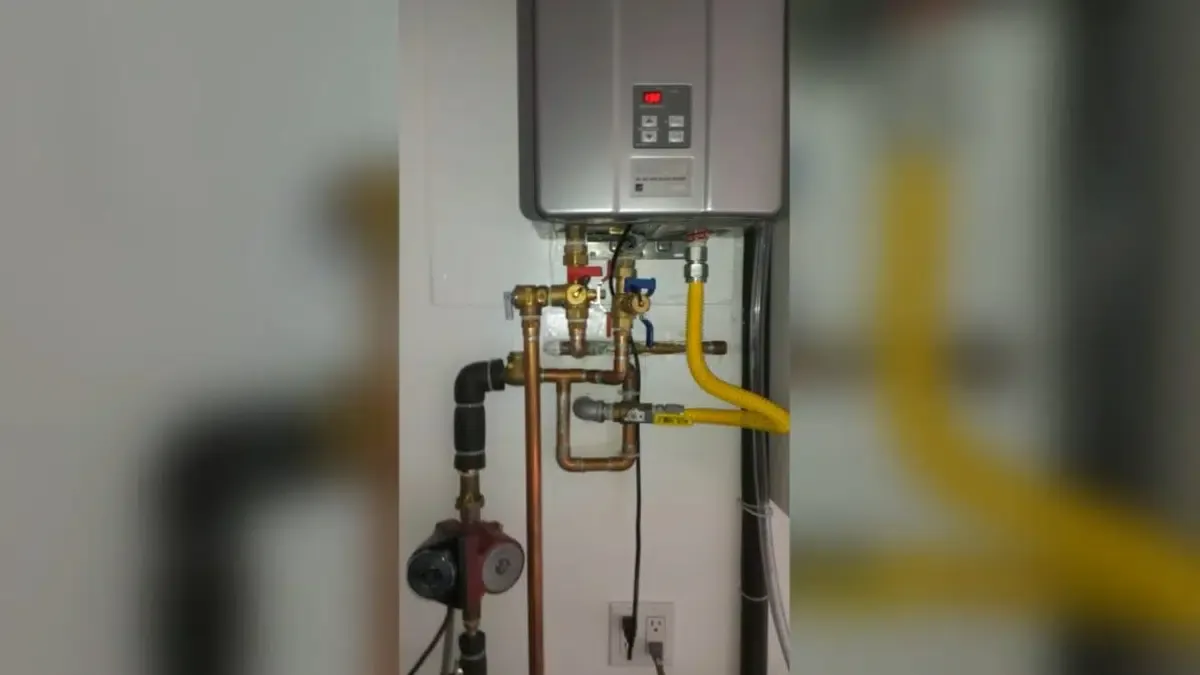
A gas tankless heater draws far more gas per minute than a tank does when it fires. If the existing pipe and meter were sized for a small tank and a range, the supply may need to be upsized, and the gas utility may have to be involved. The unit also needs power for its controls, a condensate drain when it is a condensing model, and a vent that terminates at a legal distance from windows and openings.
Census data show about 72 percent of occupied homes in town on utility gas, so a gas model is the usual choice, but electric models exist for houses without a suitable gas line and need their own heavy circuit. Ask the plumber to confirm each of these before a unit is ordered.
- Gas line size and length from the meter to the unit
- Vent type, route and the termination point on the outside wall
- Electrical outlet or circuit, and a drain for condensate
- Clearance around the unit and access for servicing
- Water supply pressure and flow at the connections
Gas piping and appliance code
The 2024 International Fuel Gas Code, adopted by Bisbee along with the 2024 International Plumbing Code, governs gas piping and appliance connections. Ask the plumber to confirm that the gas sizing and vent plan follow those editions, and ask the City whether a unit swap needs a permit.
If you are weighing a tankless unit, call and ask for a gas and vent check on the existing house before choosing equipment.
Call (520) 340-7175Installation of tankless water heaters follows a set order: confirm gas, vent and power, mount the unit, connect the gas and water lines, run the vent, then test for leaks and set the temperature before the plumber leaves.
Repair and troubleshooting
Tankless heaters announce their faults with an error code, and the code narrows the cause. Common ones include an ignition failure, a flame sensor that needs cleaning, a blocked vent or intake, a flow rate too low to start the burner and a heat exchanger restricted by scale. Photograph the display before resetting the unit, because the sequence of codes helps the plumber.
The cold water sandwich, a brief burst of cold water between two hot ones, is a common complaint and is usually a feature of the controls, not a failure. If it is new, or if the unit shuts off mid-shower, ask for a test of flow, pressure and the sensors. When the unit is old and the heat exchanger is failing, repair and replacement look different from a tank; the guide on when a tank heater is worth repairing shows how those decisions compare.
Flushing and descaling, and why hardness matters
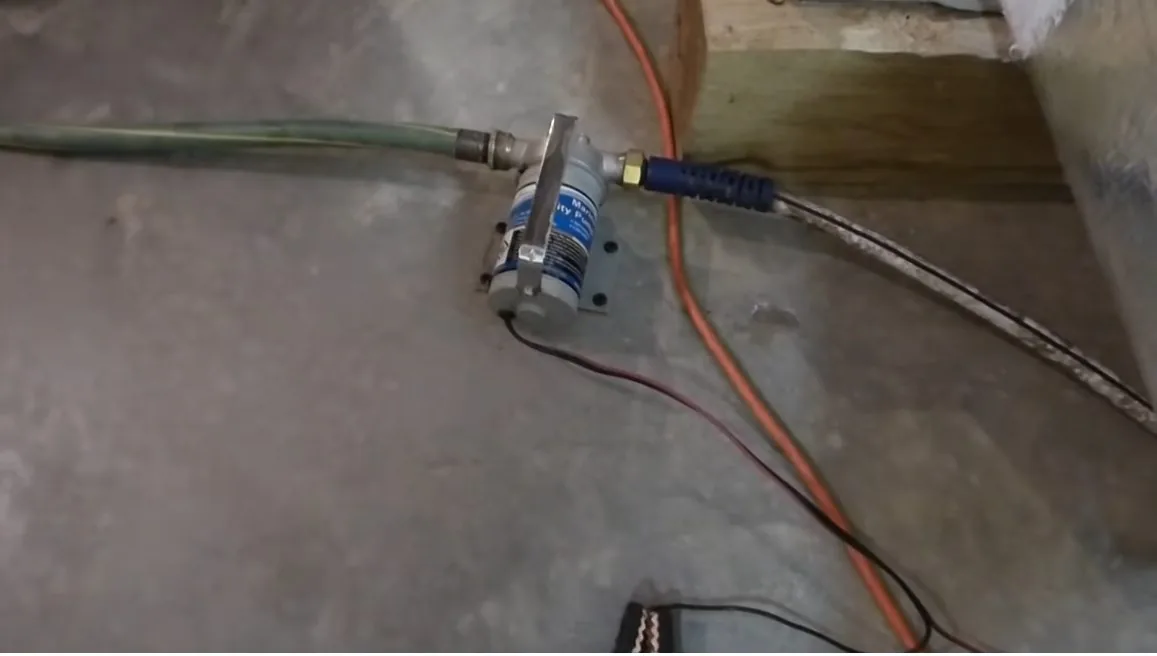
Scale forms where water is hottest, which is inside a tankless unit's heat exchanger, and it reduces flow and heat transfer until the unit trips on temperature. Descaling means circulating a mild acid solution through the exchanger with a small pump and valve kit, then flushing it. Maintenance schedules differ by maker, and the right interval depends on how mineral-rich the water is.
Scale and the local supply
Bisbee's water comes from wells at Naco, and the utility's 2025 report gives no hardness figure, so any descaling schedule tied to one would be a guess. Test your own tap, then decide how often to flush. A water softener or filter is a separate question, covered on the page about testing water and treating scale.
Replacing a tank with a tankless unit
A conversion is mostly a gas, vent and plumbing job. The old flue is usually the wrong type, the water lines may need new fittings and the wall space has to be cleared and framed. Some houses gain floor space and others find the conversion more involved than expected. The plumber should explain which case yours is before work starts.
Outdoors is another option, but at 5,300 feet in a climate with freezing nights, an exterior unit needs freeze protection and clearances from the building. Old Bisbee adds a rule of its own, covered in the next block.
Venting a tankless unit in Old Bisbee
Design Review Board approval can apply to a tankless unit that vents through an outside wall or sits on the exterior of a building in the historic district, because the Board reviews exterior mechanical equipment and vents whether or not a building permit is needed.
Ask for brand and model by name, the warranty terms on the heat exchanger and parts, and what routine service the maker requires. A written scope that lists the gas line work, vent type, condensate drain and permit status protects you if a question arises later.
Gas, vent, scale and conversion: tankless water heater questions
Is a tankless water heater right for my Bisbee house?
It depends on the gas line, the vent path and the space more than on the unit. Ask for a check of gas pipe size, vent routing and clearances first. If those need little work, tankless can fit well; if they need a lot, a tank may be the simpler choice.
How do tankless and tank water heaters compare?
A tank stores hot water and can run out. A tankless unit heats on demand and does not run out, but it needs a larger gas or electric supply, a specific vent and scale maintenance. Neither is better in every house, so compare what each would require from yours.
How often should a tankless heater be flushed or descaled?
It depends on the maker and on how much scale the water leaves. No hardness figure is published for the local supply, so test your tap and follow the manufacturer's interval. A plumber can descale the heat exchanger with a pump kit and check flow afterward.
What does an error code on my tankless unit mean?
Codes point to a cause such as ignition failure, a dirty flame sensor, a blocked vent or low flow. Photograph the display, note what the unit was doing and call. The plumber can match the code to a test instead of guessing at parts, which saves a return trip.
Can a tankless heater run on a well-water home in Hereford or Mc Neal?
It can, but scale and sediment are more likely to be an issue on private wells, so test the water first. Ask about a sediment filter or treatment and about a maintenance schedule. The utility does not supply those homes, so the testing is up to the owner.
Thinking about tankless?
Call the dispatch line and ask for a gas, vent and water check. The dispatcher routes it to a plumber for your address. If a tank is the better fit, read about replacing a tank heater.
Call (520) 340-7175