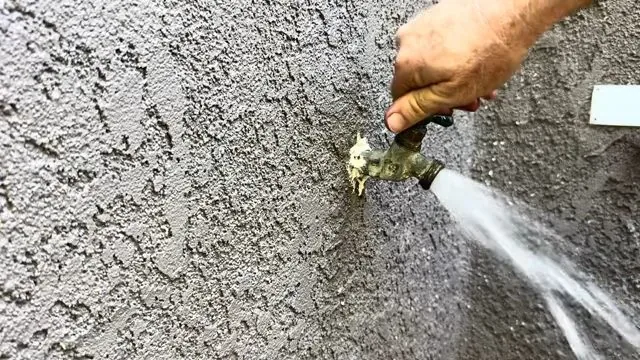
Bisbee Water Line Repair: Leaking Yard Pipe, Weak Flow and Meter Questions
Arizona Water Company supplies Bisbee from wells at Naco, and its 2025 report for the system lists no violations. A problem with the water line outside your house still starts with two questions: is the trouble before the meter or after it, and is it a leak or a pressure problem?
The answers decide who you call. Trouble on the street side of the meter belongs to the utility; trouble on the house side is a plumber's job. This page covers locating a leaking yard line, understanding pressure, valves and lead questions, and what changes for homes on private wells. The dispatch line hands the call to a plumber near the property.
Dispatch answers 24/7. Plumbers from our network serve Bisbee and the outlying areas.
Before or after the meter: who fixes what
| What you notice | Likely side | Who to call |
|---|---|---|
| No water at your house and your neighbors | The utility's supply | Arizona Water Company |
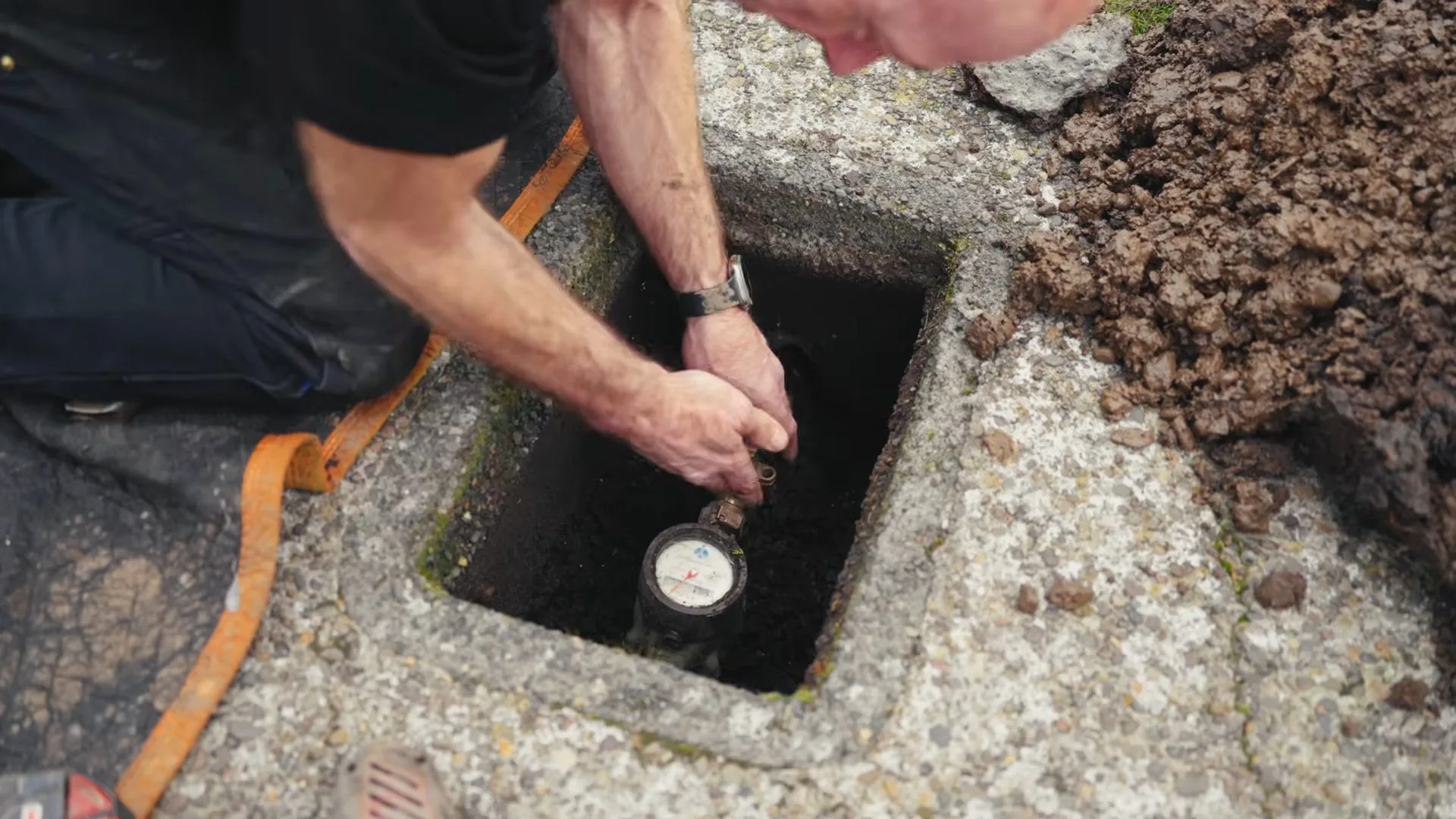
| Water bubbling up at or beside the meter box | At the meter; could be either side | The utility first, then a plumber if the leak is on your side |
| A soggy strip between the meter and the house | The yard line, on your side | A plumber; call 811 before any digging |
| Low pressure at every fixture | The supply, a closed valve or a failing regulator | Check valves, then ask a plumber to measure pressure |
| Brown or cloudy water in one house only | Your own piping or fixtures | A plumber, after flushing a cold tap for a few minutes |
The company's report does not spell out where its responsibility ends at the meter, so ask it that directly. Knowing the boundary in writing helps if a leak shows up near the box.
Finding a leaking yard line
A yard line leak can run unseen for months. The first sign is often the water bill, or a meter that moves when every fixture is off; the check is described on the page for finding hidden leaks with a meter test. A wet or unusually green strip on the ground, a dip in the yard or a sound of running water outside points to a buried break.
Locating the break before digging keeps the trench short. Listening equipment finds the sound of escaping water along the line, and a pressure test confirms whether the leak is on the house side of the meter. Then the plumber marks the spot and checks the route.
Some leaks turn up after a utility crew or a contractor has dug near the line. Say so when you call, since a line disturbed that way may need a shut-off valve before repairs can start.
A soggy patch between the meter and the house is worth a call before anyone digs. Describe where the ground is wet and what the meter does.
Call (520) 340-7175Before anyone digs
Arizona law requires a call to Arizona 811 before digging, and homeowners are included. Utility locators need two working days before a dig can begin. If the dig reaches a street, an alley or the public right-of-way, the City Code also requires an excavation permit.
Repair, replacement or reroute for a yard line
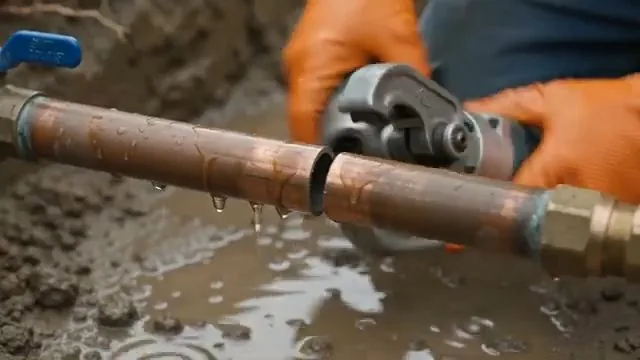
A single pinhole or a failed joint is a short repair: expose the pipe, cut out the damaged piece, fit a new one, test it and backfill. A line with several leaks, or one made of a material that has reached the end of its life, is usually cheaper to replace than to chase. Where the line crosses a patio, a driveway or a retaining wall, a reroute around the obstruction can avoid breaking structures.
Burial depth matters at this elevation. The city code sets a 12 inch frost depth, so a new line should sit below it, and rock or caliche in the trench can change the method. Ask how deep the existing line runs and what the new one will be made of.
Pressure: too low, too high, or uneven
Pressure problems have simple causes more often than dramatic ones. Low pressure at one fixture is usually a clogged aerator or a partly closed stop valve. Low pressure everywhere points to the supply, a closed main valve or a failing pressure regulator. High pressure, which shows as banging pipes or a relief valve that weeps, usually means a regulator that has failed or is missing.
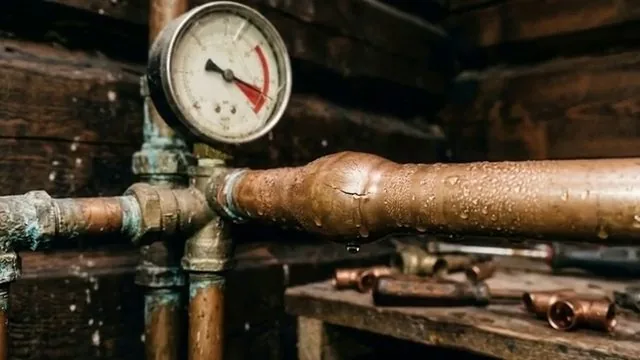
A gauge screwed onto an outdoor tap gives a reading in a couple of minutes. Bisbee's planning area runs from about 4,700 to 5,700 feet in elevation, so pressure differs from one slope to another, which is a reason to measure rather than assume. A plumber can replace a regulator or adjust it and then confirm the result.
Shut-off valves: find yours before you need it
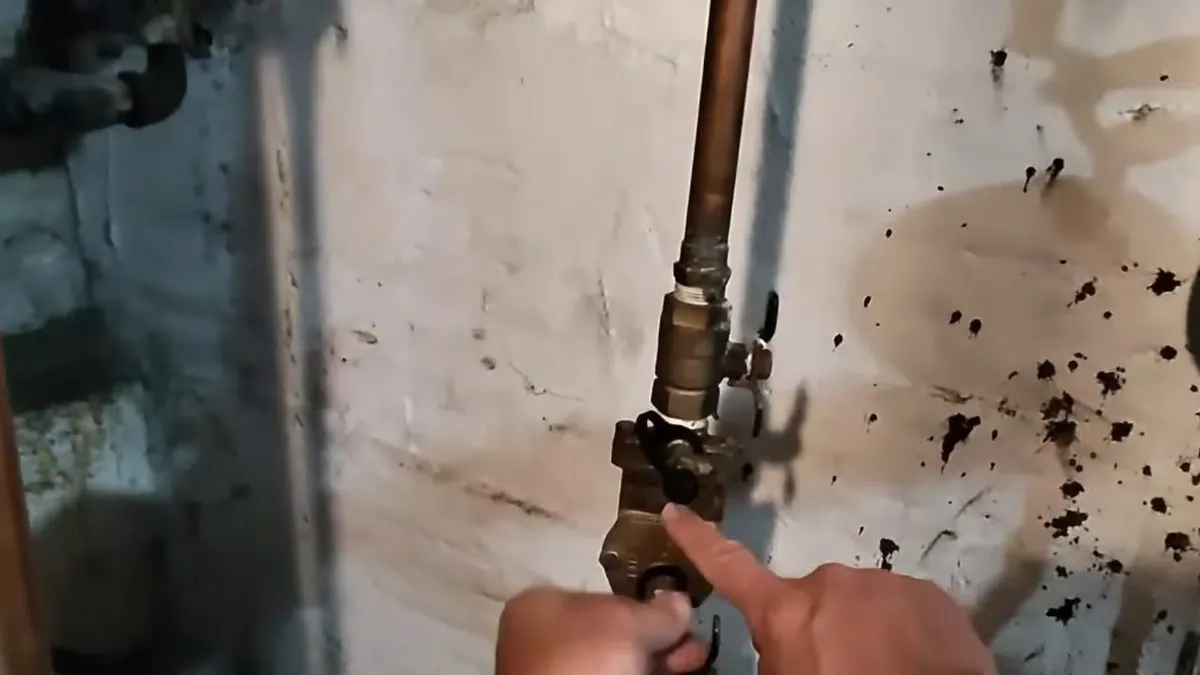
Every house has a main shut-off, and in an older house it may be a gate valve that has not been turned in decades. A stiff valve can break or fail to seal when it finally gets used. If yours leaks around its stem or will not close, call a plumber to replace it before an emergency; a leaking main valve may need the utility to close the supply at the meter first.
Lead and pipe material questions
The company's 2025 report lists lead and copper sampling with no samples over the action level, names internal corrosion of household plumbing as the typical source, and notes that a service line inventory exists. If you are worried about the pipe between the meter and your house, ask the utility what its inventory records for your address, and ask a plumber to identify what the line is made of.
What the water company reports
Arizona Water Company supplies Bisbee from groundwater wells located at Naco, and its 2025 report records zero violations for the year. The report does not give a hardness figure, so a theory that hard water is wearing out your pipes needs its own tap test as evidence.
Homes on private wells: Hereford and Mc Neal
Outside the city, many homes use private wells rather than a utility. The University of Arizona Extension notes that well owners are responsible for testing their water and that fluoride runs high in parts of Cochise County. A well pump and its controls are usually the work of a well or pump contractor; a plumber covers the supply lines, valves and fittings on the house side. The dispatcher can tell you which applies when you call, and the pages for Hereford and Mc Neal cover those areas.
Shut the water off first. If a line has failed and water is pouring out, close the main shut-off valve at the house. If the valve will not close, call the dispatch line and say so; the utility may need to shut the supply at the meter.
Pressure, valves, yard leaks and wells: water line questions
Why is my water pressure too high?
High pressure usually means a pressure regulator that has failed or was never installed, or a supply that is high for your elevation. Signs include banging pipes, a relief valve on the water heater that weeps and fixtures that wear out early. A plumber can measure the pressure at an outdoor tap, then replace or adjust the regulator and confirm the reading.
How do I know if the leak is in the yard or at the meter box?
Run the meter check: close every tap and watch the meter for an hour; any movement means a leak on the house side. A soggy stretch of ground running from the meter toward the house suggests the yard line. Water bubbling right at the box could be either side, so call the utility and a plumber and ask where the boundary lies.
What do I do about an underground pipe leak?
Close the main shut-off if water is running, then have the break located before digging. Arizona 811 must mark lines first, and a street or alley dig needs a city permit. A plumber can find the leak with listening equipment and keep the trench short. Keep the wet spot and the meter reading in photos for your records.
My main water valve is leaking. What should I do?
If it drips from the stem, a plumber can often repack or replace the valve. If it will not close, call and say so, because the supply may have to be shut at the meter. Do not force a stiff valve; an old valve can break. Replacing a failing main valve before an emergency is much easier than during one.
Do you work on well pumps and pressure tanks?
A well pump and its controls are usually handled by a well or pump contractor. A plumber covers the supply lines, valves and fittings on the house side of the tank. Many homes in Hereford and Mc Neal are on private wells, so tell the dispatcher you have one, and ask which kind of contractor your problem needs.
Weak flow or a wet yard?
Call the dispatch line and say which side of the meter the trouble seems to be on. The call goes to a plumber serving your area. If the cause turns out to be an old supply run, see replacing worn supply pipe.
Call (520) 340-7175